
The Rhythm of Stress and Recovery
There’s a quiet intelligence in the body that is always scanning and adjusting to keep us safe. At the center of this system is something called the HPA axis (hypothalamic-pituitary-adrenal axis), a network that connects the brain to the body and orchestrates how we respond to stress.
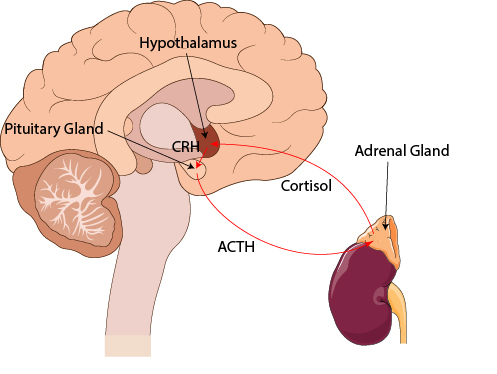
This axis is the body’s main stress response system. It encompasses a conversation between three key players: the hypothalamus, the pituitary gland, and the adrenal glands. Together, they release hormones like cortisol and adrenaline, preparing us to respond to whatever challenge we’re facing.
When everything is working well, this system is beautifully self-regulating. Stress comes, cortisol rises, and then once the threat passes, the body turns the dial back down. A built-in negative feedback loop signal.
“You’re safe now, you can rest.”
But the modern world doesn’t always give us clear endings to stress. When stress is frequent, intense, or prolonged, this system can lose its rhythm.
When the Stress System Loses its Balance
Dysregulation of this system can show up in many ways.
- Anxiety and Irritability
- Digestive Issues
- Insomnia
- A "wired but tired" feeling
- Brain Fog
When the HPA axis is overactive it keeps cortisol levels high, the body tense, and the mind alert long after the moment has passed. When it is underactive, it leaves the body less able to respond to challenges, including infections.
This imbalance can affect memory, learning, and long-term brain health.
How does the dysregulation happen?
Chronic stress can dull the body’s ability to “hear” the signal to stop. The system forgets how to come back down to the baseline and the body stays flooded with stress hormones.
Two Pathways of Stress: Top-down and Bottom-up
Not all stress enters the system the same way.
There’s the direct pathway, which is fast, automatic, and rooted in the body. This is our response to physical threats. It utilizes bottom-up signals that move from the body to the brain.
And then there’s the indirect pathway, which is shaped by perception. These are psychological stressors. They utilize top-down signals that pass through a cognitive “gatekeeper” before activating the stress response.
Understanding this distinction matters because it shows us something important: sometimes the body is reacting not to what is, but to what the brain predicts.
How we can regulate ourselves heavily depends on which of these systems are being activated.
Neurotransmitters: The Brakes and The Gas
Behind the scenes, a few key neurotransmitters are at play.
GABA, endorphins, and endocannabinoids act as brakes, calming the system and preventing overactivation. Glutamate, on the other hand, is the gas. It’s more excitatory and helps the brain to stay alert and responsive.
High cortisol levels over time can lead to dopamine buildup, dopamine receptor desensitivity, and impaired dopamine production. On top of this, if the enzyme that converts dopamine into noradrenaline is sluggish (sometimes seen in neurodivergent profiles), you can end up with excess dopamine and insufficient noradrenaline, which can cause a "stuck" feeling of high internal pressure but difficulty starting a task.
In many neurodivergent brains (like ADHD or Autism), the brakes (GABA) aren't necessarily missing, but they might be less efficient or poorly distributed. This leads to sensory flooding when the brain can't filter out all the "noise". To counter this, the brain downregulates (“hides” the receptors) to prevent overstimulation.
This leaves us feeling:
- Foggy Headed
- Low on motivation
- Having little to no executive functioning
Chronically existing in this state over time can reshape how we think, feel, and function.
- It can reduce cognitive flexibility and learning by limiting neuroplasticity.
- It can heighten fear and anxiety by shifting control away from the prefrontal cortex and toward the amygdala.
- It can contribute to chronic inflammation and weaken immune responses.
- It can impair memory.
- And it disrupts sleep.
When this rhythm is disrupted, everything else starts to feel off-balance.
Movement as Medicine: Regulating the Stress Response
Here’s the good news,
The HPA axis is not fixed. It’s trainable! And one of the most powerful ways to influence it is through rhythm and movement.
Movement and rhythm can speak directly to the body by sending predictable signals that bypass cognitive overthinking. In many ways, it acts like a remote control helping adjust the volume of the stress response.
But not all movement works the same way, especially for sensitive or neurodivergent systems. (Remember the Top-down and bottom-up concept from above?)
The key is not just what we do, but how and when we do it.
Five Gentle Ways to Work With Your Nervous System
1. Heavy input for grounding:
Slow, resistance-based movement (like pushing against a wall, lifting weights, or using a weighted vest) provides proprioceptive input. This kind of “heavy work” sends bottom-up signals of safety, helping quiet anticipatory stress from the mind.
2. Micro-dosing movement in the morning:
A few minutes of gentle, rhythmic movement and natural light can help regulate the cortisol awakening response (which is the cortisol spike we get in the mornings to wake up). It gently sets the body’s internal clock, supporting energy during the day and rest at night.
3. Crossing the midline:
Simple cross-body movements (like touching opposite hand to knee) help integrate the brain’s hemispheres. This strengthens top-down regulation (the ability of the thinking brain to reassure the emotional brain that things are okay).
4. Activating the vagal brake:
When the world feels overwhelming, small rhythmic actions like rocking or humming can stimulate the vagus nerve. This helps dial down stress signals at their source, even if the environment hasn’t changed!
5. Choosing steady over intense:
Low-intensity, steady movement (like walking at a conversational pace) can help regulate dopamine and clear excess stress hormones without overwhelming the system. Sometimes, slower is more effective!
A Final Reflection

The goal isn’t to eliminate stress. Stress is part of being alive. (eye-roll)
The goal is to build a system that knows how to:
- come back to calm
- rise when needed
- soften when it's safe
- remember that not every signal is an emergency
Movement gives us a way back into that rhythm when seen as communication rather than productivity.
Its a conversation between the body and the brain.
And a reminder, over time: you are safe enough to settle.